Rate your priorities.
Choose the topics that apply. Privately rate each from 1 to 10. In Companion Mode, reveal and average your ratings to create shared card values.
 Join the waitlist
 Thoughtfully created. Personally meaningful.
Big family decisions begin with understanding what matters to each of you. Put your priorities on the table, explore possibilities, and find room to move forward.
Explore both card decks See how the exercise works




Actual artwork from the Co-Parenting collection.
The Co-Parenting Collection
The Intentional Co-Parenting Deck brings everyday parenting decisions into view—from school choices and weekly schedules to holidays, family relationships, and travel.
Rate what matters to you, arrange the cards, and explore different possibilities within a point budget. Use it privately to prepare, or together to better understand each other’s priorities.
Take time to sort through what matters most, identify where you may be flexible, and bring a clearer starting point to your next conversation or mediation session.
1 deck · 67 cards · Instructions & worksheets
Preview pricing in USD. Shipping and applicable taxes are additional. Join the waitlist for launch and early-access updates.
Each deck contains 67 cards: 53 topic cards and 14 modifier cards, according to the current booklet. The guide includes instructions, rating sheets, an outcome scoreboard, a modifier reference, and an optional trade log. The Companion Edition pairs a linen-backed deck with an identical black-backed deck, so each parent has a set.
Parents preparing for co-parenting conversations, families exploring arrangements as their needs change, and mediators looking for a structured reflection activity to use with families. You can begin on your own; you do not need your co-parent to participate in the Solo Edition.
No. This is a reflection and conversation tool. The cards and scores do not determine a fair or legally binding outcome, replace legal advice, or change an existing order. Use what you learn as a starting point for further discussion with your mediator and appropriate professionals.
The conversations inside
Color-coded topics make it easier to see the decisions in front of you. Set aside what doesn’t apply, and use wild cards to add what’s unique to your family.
School choice, childcare, activities, and religious commitments.
Weekdays, weekends, school breaks, and exchange logistics.
Birthdays, celebrations, and the traditions that matter.
Co-parenting apps, schedule changes, and attending events.
Extended family, new partners, and blended households.
Vacations, relocation, school costs, and situational topics.
A hands-on exercise
The point budget makes your choices visible. It invites you to explore where flexibility could create more room for what matters most.
Choose the topics that apply. Privately rate each from 1 to 10. In Companion Mode, reveal and average your ratings to create shared card values.
Use a budget of 40% of the relevant rating total, rounded. Lay out the cards you would choose. Move them around and notice what you’re willing to reconsider.
Try a modifier such as Split, Alternate, Shared, or Revisit Annually. Reflect on your own, or compare your boards and talk about the overlaps and differences.
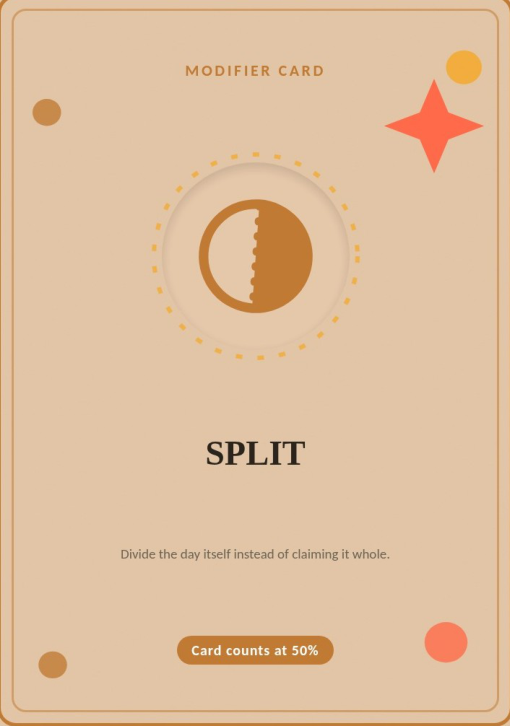
A different way to look at it
A modifier invites you to consider an alternative. Instead of choosing an entire day, try splitting it—and see how that changes your outcome board.
Points guide the exercise. Your children’s needs and real-world arrangements guide the conversation.
Guidance at every step
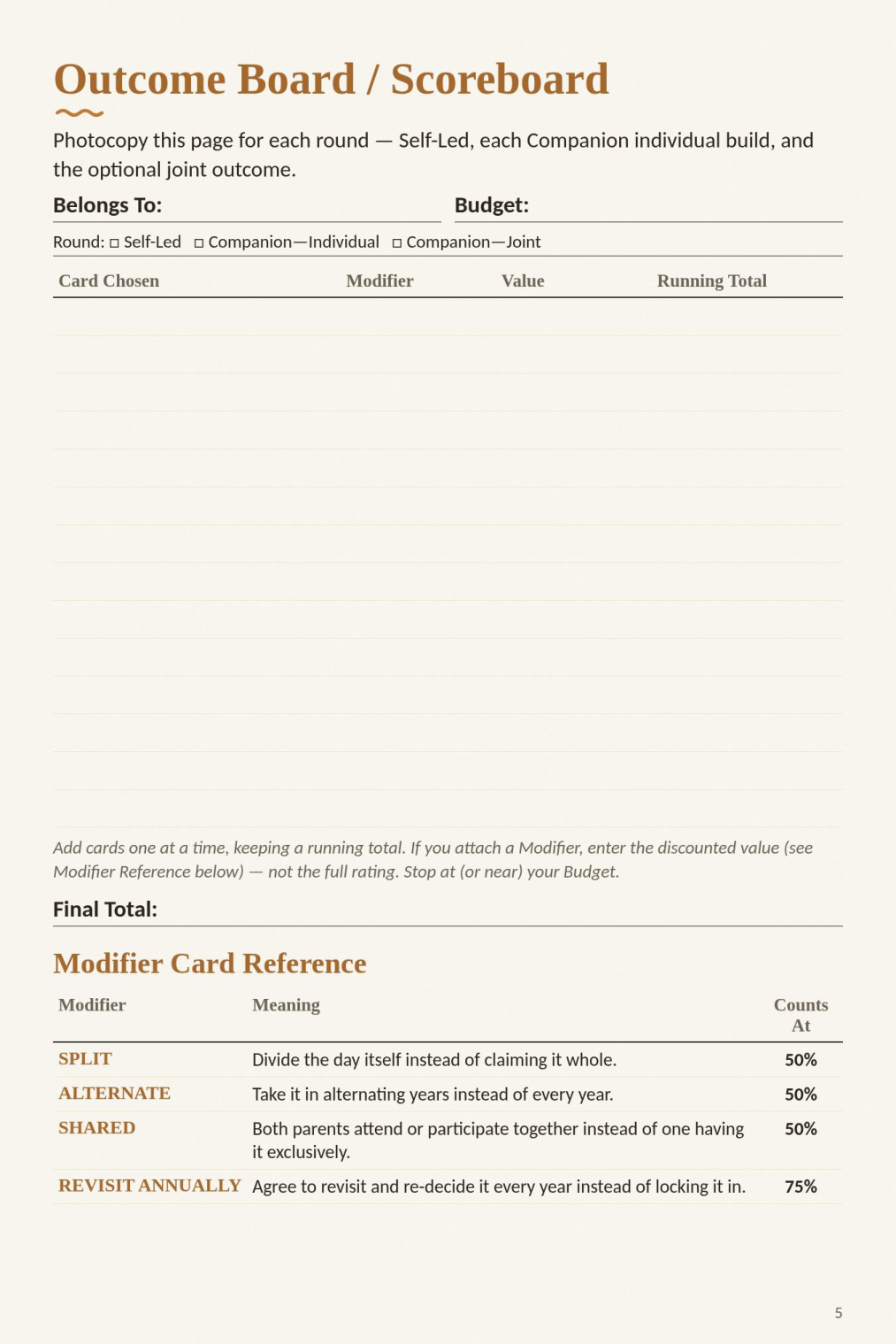
Each collection includes an instructional booklet that walks you through the exercise and gives your ideas somewhere to land.
The Co-Parenting Companion booklet also includes an optional trade log. Edition-specific materials will be finalized before launch.
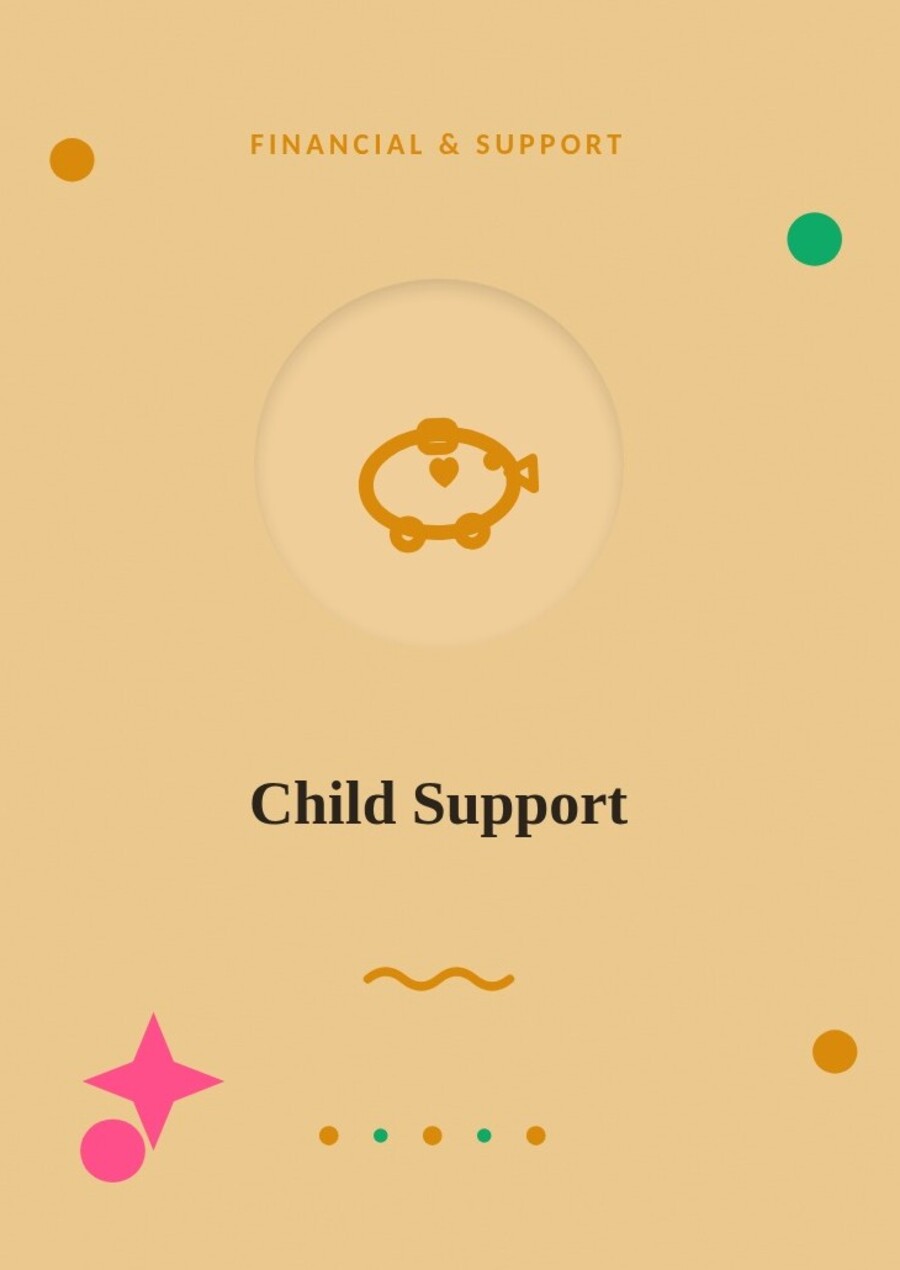
Actual artwork from the Family Resolution collection.
The Family Resolution Collection
The Intentional Family Resolution Deck helps people navigating separation or divorce explore the decisions that shape their future—from the marital home and financial support to parenting schedules, holidays, education, and changing family needs.
Each topic begins without a printed value. You decide what it means to you. Rate your priorities privately, build an ideal outcome within a point budget, and use modifier cards to test possibilities such as splitting, alternating, sharing, or revisiting a decision later.
Preview pricing in USD. Shipping and applicable taxes are additional. Join the waitlist for launch and early-access updates.
Each deck contains 73 cards: 36 core topic cards, 19 situational expansion cards, 4 blank wild cards, and 14 modifier cards. The booklet includes instructions, rating sheets, a shared value and budget tally, a modifier reference, and an outcome board.
Housing and property, financial support, retirement and debt, parenting schedules, healthcare, education, holidays and special days, travel, relocation, extended family, childcare, special education, and other situational decisions.
No. This is a private reflection and conversation tool. It does not determine a fair outcome, create a binding agreement, replace legal advice, or override any court order. Any agreement should be reached with the appropriate professionals and properly documented.
Inside the Family Resolution guide
The guide supports two ways to use the deck. In Self-Led Mode, one person prepares privately for a mediation session. In Companion Mode, both people rate independently, average their values, build separate outcomes, and compare the areas where their priorities overlap or differ.


Be first to know
Receive product updates, early-access announcements, and launch information for the card decks that interest you. No purchase is required.
From the founder
Created by Devin Tucker, family and special education mediator and founder of Intentional Resolution, these decks grew from an observation in mediation: a small act of consideration can open the door to a different conversation.
Each person brings different priorities. The exercise gives you a tangible way to explore those differences, recognize what you value, and consider possibilities for moving forward.